

Follow us on Instagram @UHSWOLVES. To report a student absence, please email unionville.hs@yrdsb.ca with your child's name and student number. If your child is absent for 3 or more days, complete the extended absence form that can be found in the Main Office.
The Month Ahead
Day | Event |
June 22 | Grade 9 - 11 - Period 5 - 9:00AM |
June 23 | Grade 9 - 11 - Period 3 - 9:00AM |
June 24 | Exam Review Day |
June 25 - 26 | PA Day (No Classes) |
For Community news and volunteer opportunities, please click here.
Full examination details have been emailed to students and families. Please check your inbox for more information.
- Regularly scheduled exams for Grade 9-12 run from Wednesday, June 17th, 2026 to Tuesday, June 23rd, 2026.
- Exam Review Day is Wednesday, June 24th, 2026
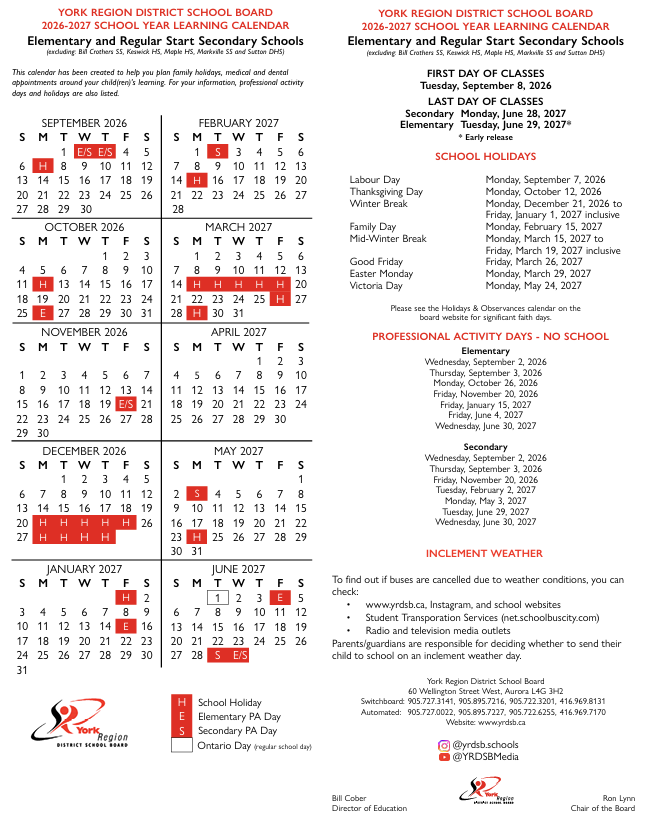
- PA Days for all students will take place Thursday, June 25th and Friday, June 26th, 2026.
Dear secondary school families,
For your information, here is information about learning that school staff will be participating in on the upcoming secondary Professional Activity (PA) Day on June 25 and 26, 2026. As usual, students do not attend school on PA Days.
All Secondary Schools
Length: Full Days – AM and PM
Topic: Transition Planning and School Improvement Planning
Entity Hosting: All Secondary Schools
Presenter(s)/Facilitator(s): School Administration and Board Based Personnel
Description: School Teams will engage in School Improvement Planning, reflecting on the impact of strategies used during the year and their impact on student outcomes.
With the secondary school exam period beginning, here are 10 tips to help students prepare for exams and manage stress:
- Take care of your health. Eat healthy, drink water and get plenty of sleep.
- Plan breaks. Schedule blocks of time for rest and activities that bring you joy. This could be exercise, time outside, extra-curricular activities, connecting with others or enjoying hobbies.
- Stay connected. Maintain social connections and know who you can reach out to for support, including friends, family and school staff.
- Create a study plan. Schedule dedicated blocks of time without distractions.
- Use study methods that work for you. There are lots of different ways to study. Use study techniques and exam preparation strategies that work for you.
- Create a space for studying. Find a place that works best for you - is free of distractions, has a flat surface and proper lighting
- Look after your mental health. There are lots of strategies to help you stay calm and manage stress before, during and after exams. This could include mindfulness strategies, visualization, breathing exercises, positive thinking and more.
- Be prepared on exam day. Arrive early, review all the questions before you begin and read each question carefully.
- Ask for help when needed. Try different strategies and techniques to learn what works for you, and ask for help or support if you need it.
- Practice positive self-talk. Before, during and after the exam, remind yourself for example,, "I am doing my best, I have got this, I am proud of myself/my studying, etc.”
“The exam period can be a stressful time for students and it’s important that they know there are lots of strategies they can use to help them prepare and manage stress during this period,” said Patricia Marra-Stapleton, Mental Health Lead, York Region District School Board. “The caring staff in our schools are there to provide support and guidance and to help students find what works best for them.”
Members of the school board's mental health team met with some students to talk about managing stress and mental health during exams on the Tune In YRDSB podcast. For more tips and strategies on preparation, managing stress and supporting wellness during exams, listen to the podcast episode.
Learn more
YRDSB continues to encourage families to use safe transportation to and from school. We encourage students to use active school travel whenever possible. Active travel refers to any form of human-powered transportation, including walking, cycling, rollerblading, skateboarding, and scootering.
School Property
Students using any transportation device, whether electronic or not-electronic, must dismount before arriving on school property. This includes all sidewalks, pathways, and walkways on school grounds. Please note that the school is not responsible for lost or damaged equipment.
Provincial Regulations
These modes of travel offer many physical, mental, and community benefits. Please visit the Ontario website for a full list of regulations. Every cyclist under 18 must wear a properly fitting bike helmet. Some students may also choose to use electronically assisted devices, such as e‑scooters or e‑bikes. In Ontario, you must be 16 or older to ride an e-scooter or e-bike. When riding e‑scooters or e‑bikes, it is important that students follow all applicable municipal regulations to ensure their safety and the safety of others.
Municipal Regulations
Before riding any device, it is important for students and families to be aware of the regulations set by their local municipality. These may include minimum age requirements for operating electric devices, helmet laws, and other safety guidelines.
Respectful Riding
Pedestrians always have the right of way. Students are expected to ride with caution by slowing down, using a bell when approaching others, and passing on the left. Wearing reflective clothing is encouraged to increase visibility and promote safer travel.
For more information, parents are encouraged to visit:
https://www.ontario.ca/page/bicycle-safety
https://www.ontario.ca/page/riding-e-bike#section-0
On-Line to Success (OLTS) - Ontario
Grade 12 (+) students with a disability (LD, ADHD, ASD, mental health) planning on attending post-secondary.
On-Line to Success (OLTS)-Ontario is a transition program for high school students going into Grade 12 (or doing extra year) with learning disabilities, ADHD, ASD, and/or mental health disorders (such as anxiety or depression) who plan to attend college or university. This online course runs during the summer and guides students through various activities and assignments designed to prepare them for the challenges they may face in post-secondary school
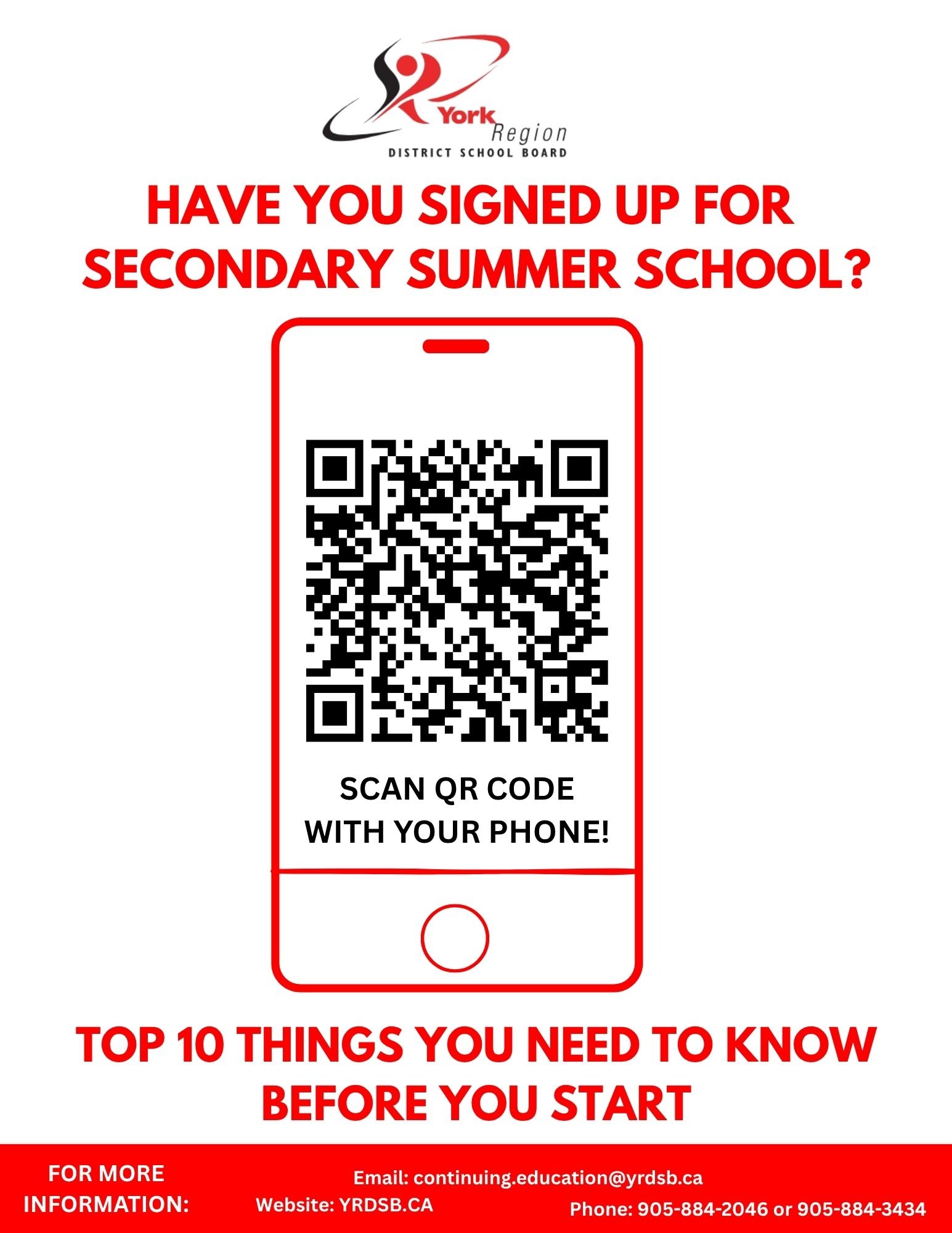
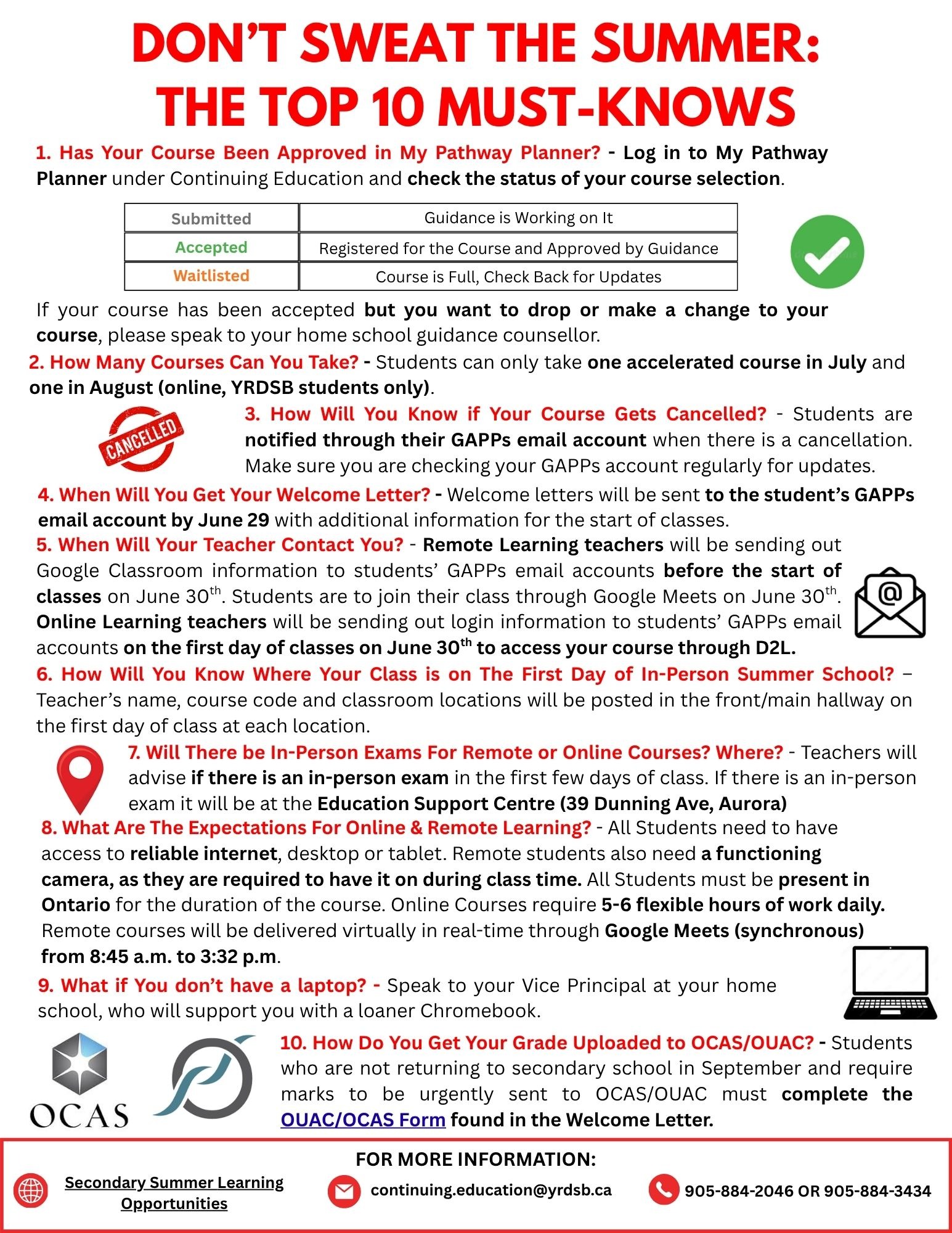
Please click the following posters for more information:
Canada Summer Student Program
Excited summer students jobs opportunities from CCSYR
Please click the link for the job postings:
Event Marketing Specialist (Summer Student)

Youth in Policing Initiative (YIPI)
A summer employment and mentorship program that helps youth build skills, confidence and meaningful community connections.
Click here for more information.